November
The swell arrives properly. Anchor Point starts working most weeks, the beach breaks at Tamraght are at their best, and the water is still around 20°C, so a 2 mm suit or a shorty does the job. Crowds are moderate and flights are cheap. If we had to pick one month for a mixed-level group, it would be this one.
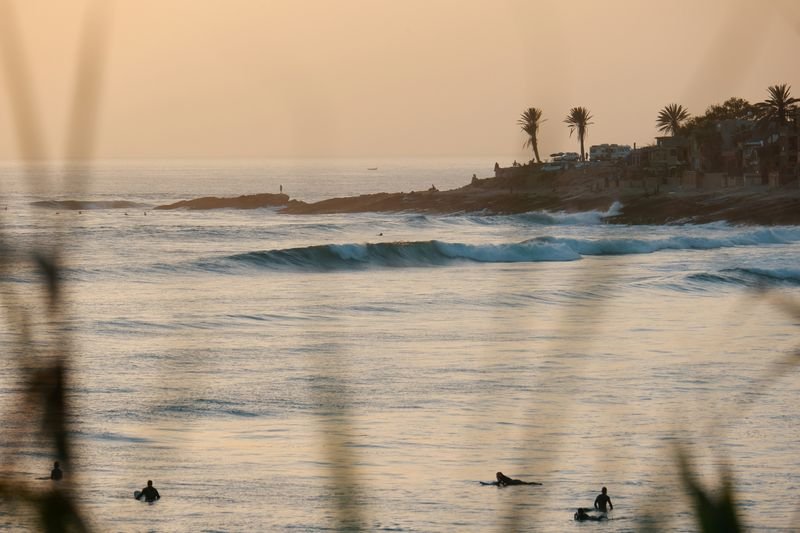
Spot by spot: Banana Point is in its best range at 1 to 2 m, Crocro takes the intermediates when Banana is crowded, and Hash Point and Panorama in front of Taghazout still hold beginner lessons on the small days. The points work on the push from low to mid tide and the beach breaks around mid tide, so the coach reads the tide table over breakfast.
December
Bigger and more consistent. The points fire two or three times a week; Killer Point and Boilers start breaking for advanced surfers. Water drops to about 18°C and a 3/2 becomes the suit. The Christmas fortnight is the busiest of the year in Taghazout, in the water and in the cafés; Tamraght stays calmer.
Anchor Point is at its best between 1.5 and 3 m; intermediates surf it with a coach on days under about 1.5 m, and above that it belongs to advanced surfers. Killer Point, six minutes in the van, holds 2 to 4 m. Between 1 and 2 m of swell, beginners staying in Taghazout are driven to Banana Point, twelve minutes away; above 2 m, to Devil's Rock. Christmas fares run two to three times the off-season €60 to €150, and the weeks from December to March are the first to fill.
January
The coldest water of the year, around 17°C, and the largest swells: 2–3 m at the points is normal, 4 m happens. Intermediates ride the sheltered points and Banana Point at size; beginners are at Devil's Rock, where the headland halves the swell. Air temperatures are 20–22°C by day, cool at night. Bring a jumper for the roof.
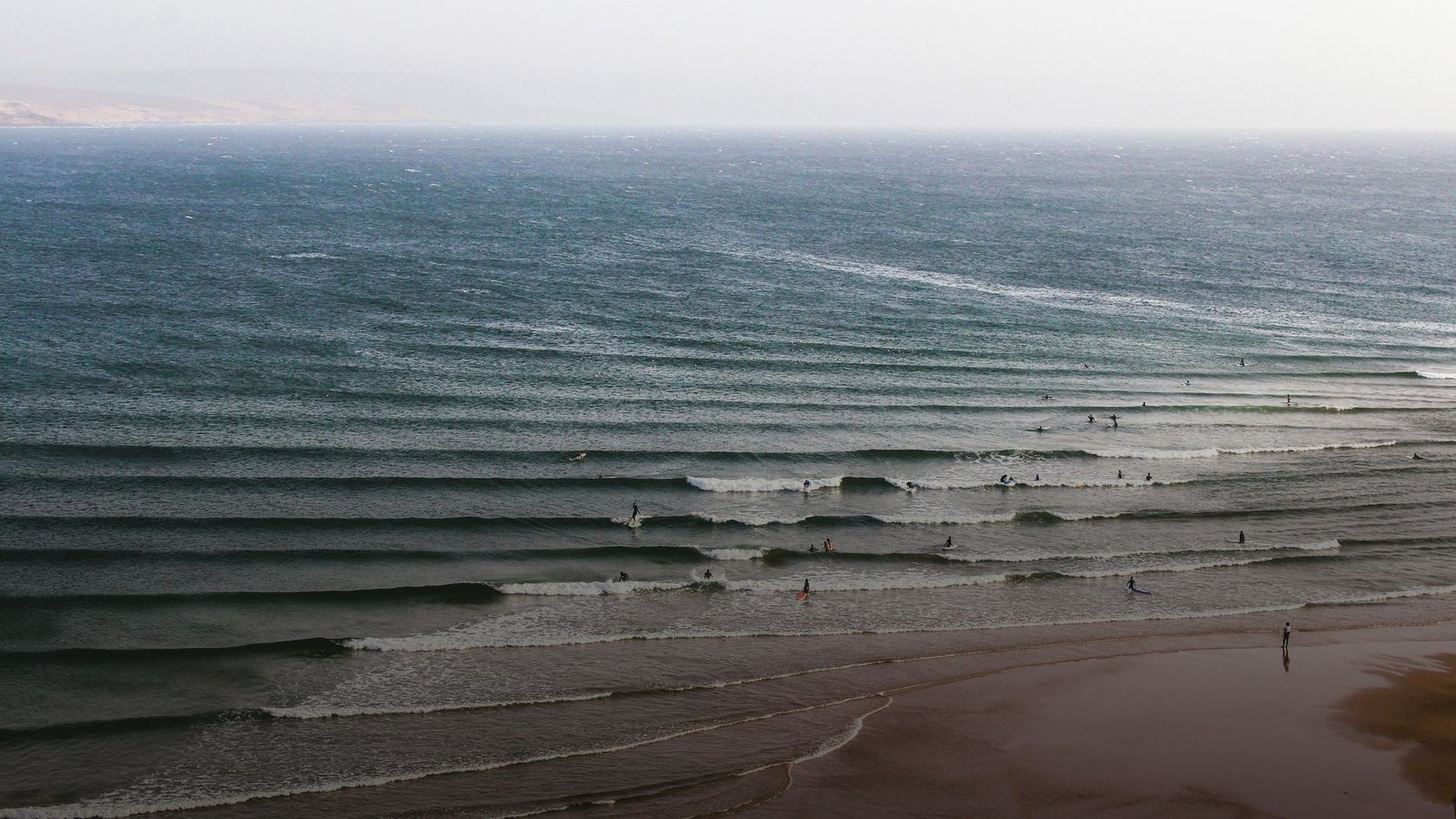
For a beginner this is the month that makes the case for the Tamraght hostel: Devil's Rock, eight minutes in the van, is a sand-bottom beach break with a channel that works best from 0.5 to 1.5 m, and the coach has a session there on the biggest days while the points are left to the advanced surfers.
February
Still big, slightly less relentless, and the crowd thins after the school holidays. Some of the best days of the year happen in February when a long-period swell meets an offshore morning. Water stays around 17°C.
The winter price is the same as any other month, because there are no seasonal supplements: as an intermediate, 7 nights in Taghazout are €490 per person and €420 in Tamraght, 3 nights €210 and €180. A split stay from 4 nights, at least 2 in each hostel, is charged leg by leg. Cancel more than 14 days before arrival and the deposit comes back in full; one date change is free up to 3 days before arrival.
| Month | Typical swell | Water | Suit | Crowd |
|---|---|---|---|---|
| November | 1–2 m | 20°C | 2 mm / shorty | Moderate |
| December | 1.5–3 m | 18°C | 3/2 | High over Christmas |
| January | 2–3 m | 17°C | 3/2 | Moderate |
| February | 1.5–3 m | 17°C | 3/2 | Moderate to low |
Which hostel for surfing Morocco in winter
Intermediates and up should take the Taghazout surf camp: the points are on foot and every morning starts with a look at Anchor from the roof. Beginners should take the Tamraght hostel, where Devil's Rock stays surfable on the biggest days and the coach never has to search for a wave. Both hostels supply 3/2 wetsuits from December. Book a winter week, and read the full spots guide for the other eight months.