Taghazout weather: the short answer
No month in Taghazout has weather that keeps you out of the sea. What changes is the size of the swell, the thickness of the wetsuit and whether the afternoon is a second session or a swim. October and November are the best all-round months. December to February bring the biggest waves; the sea is coolest from January to March, and the few rainy days, about three a month, fall mostly from November to March. May to September are warm and dry, with small waves and a breeze every afternoon. The climate is semi-arid, like that of Agadir, about 24 km south by road.
Month by month: air, sea, rain and sun
Long-term averages: air from the NOAA climate normals for Agadir (1991–2020) and Weather Spark's model of the Taghazout coast, rain and sun from NOAA, the sea from three published records for Taghazout. Where sources differ, we give the range. A rainy day has at least 1 mm.
| Month | Day / night | Sea | Rain | Sun per day |
|---|---|---|---|---|
| January | 20–21 / 8–9 °C | 17–18 °C | 32 mm, 3 days | 7.5 h |
| February | 21–22 / 10–11 °C | about 17 °C | 29 mm, 3 days | 8 h |
| March | 22–23 / 12–13 °C | 17–18 °C | 31 mm, 3 days | 8.5 h |
| April | 22–23 / 14 °C | 17–19 °C | 14 mm, 2 days | 9 h |
| May | 23–24 / 16 °C | 18–19 °C | 6 mm, 1 day | 9.5 h |
| June | 24–26 / 17–18 °C | 19–20 °C | 1 mm, rare | 9 h |
| July | 25–27 / 18–19 °C | 20–22 °C | almost none | 8 h |
| August | 26–27 / 18–20 °C | 20–22 °C | 3 mm, rare | 8 h |
| September | 25–26 / 18–19 °C | 20–22 °C | 4 mm, rare | 8 h |
| October | 24–26 / 16–17 °C | 20–22 °C | 21 mm, 2 days | 8 h |
| November | 22–24 / 13 °C | 19–20 °C | 42 mm, 3 days | 7.5 h |
| December | 21–22 / 10–11 °C | 18–19 °C | 49 mm, 3–4 days | 7 h |
August is the warmest month and January the coolest, but the spread is small. The sea lags behind the air: coolest from January to March, at around 17 °C, warmest from August to October. May is the sunniest month, with close to ten hours a day. Two things the averages hide: now and then the Chergui, a hot wind off the Sahara, pushes the temperature above 40 °C for two to five days; and from November to April the nights drop to between 8 and 14 °C, so the roof terrace wants a jumper after dinner.
Swell and wind through the year
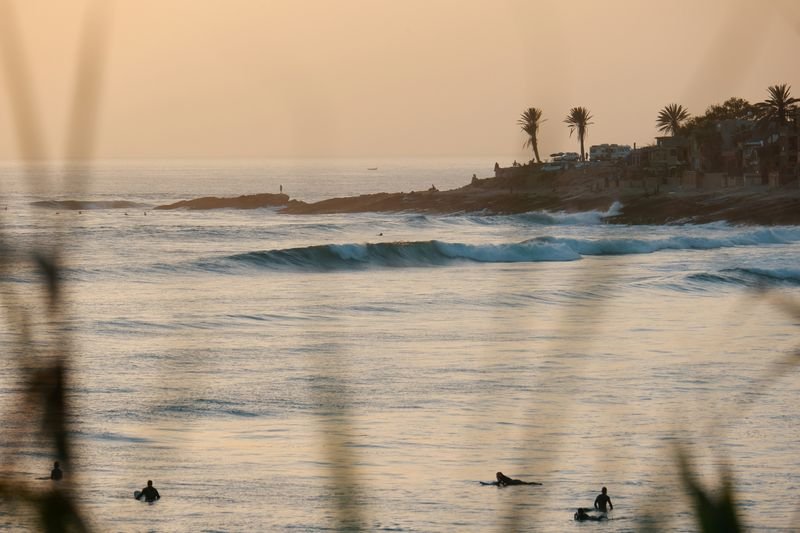
October and November open the season. The summer breeze drops, the first North Atlantic lows send swell of 1 to 2 m, and the mornings are offshore. The beach breaks in Tamraght run almost every day, Anchor Point starts working in the good weeks of October and in most weeks of November, and the line-ups are still quiet.
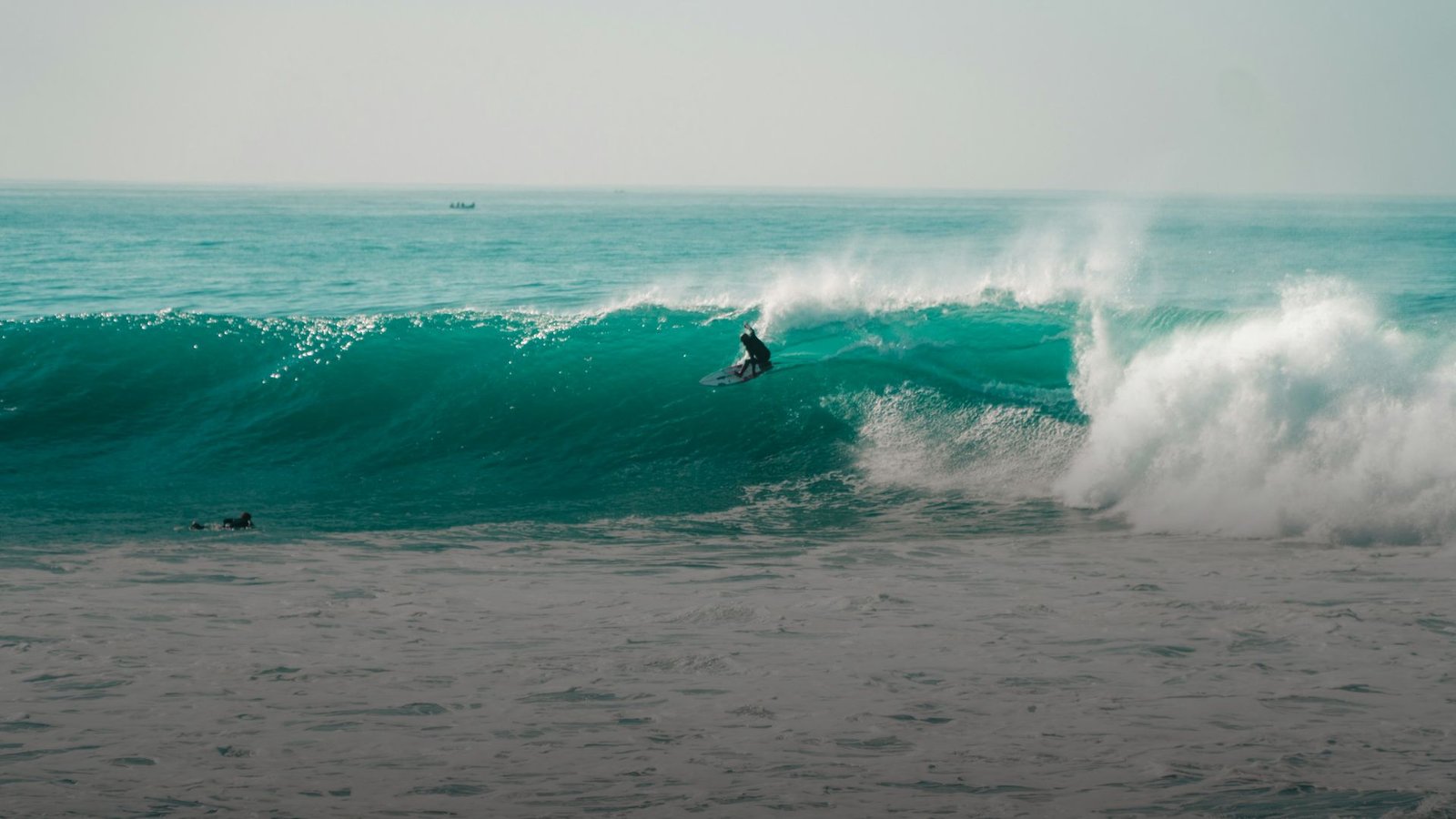
December to February is the heart of the swell. Long-period swells reach the points from the north-west; 2 to 3 m is normal and 4 m happens, and Killer Point and Boilers start breaking for advanced surfers. The morning wind is offshore, from the east and north-east, coming down from the hills, with a few stormy days each winter. Published surf statistics put Anchor Point at its best most often in January. It is also the busiest time in the water at Taghazout, the Christmas fortnight above all.
March and April keep the swell coming, smaller, with longer days and emptier line-ups: winter waves without the winter crowd.
May to September is summer. The Azores high settles, the waves drop to 0.5 to 1.5 m most days with the odd flat one, and the sea is at its warmest. Mornings are glassy; from about 13:00 a sea breeze fills in, which in summer can blow hard from the north, so the second session is often a swim. May is the windiest month on average. The points rarely work in summer, but when they do, they are empty.
Which wetsuit for which month
Boards and wetsuits are part of every package, so you bring neither. This is what the hostels hand out:
- December to February: a 3/2 full suit.
- March: a 3/2 or a 2 mm.
- April: a 2 mm.
- May: a 2 mm or a shorty.
- June: a shorty.
- July to September: a rash vest or a shorty.
- October and November: a 2 mm or a shorty.
Published surf guides add that surfers who feel the cold often wear a 4/3 in January and February, and a 3/2 in October and November.
When to come, by level
- Beginners: any month, from the Tamraght hostel. October, November, March and April are the most comfortable; in summer you surf before lunch; in winter Devil's Rock keeps a lesson-sized wave on the biggest days.
- Intermediates: October and November for consistent swell, warm water and empty line-ups; March, for winter waves without the winter crowd.
- Advanced surfers: December to February, when the points are at full size.
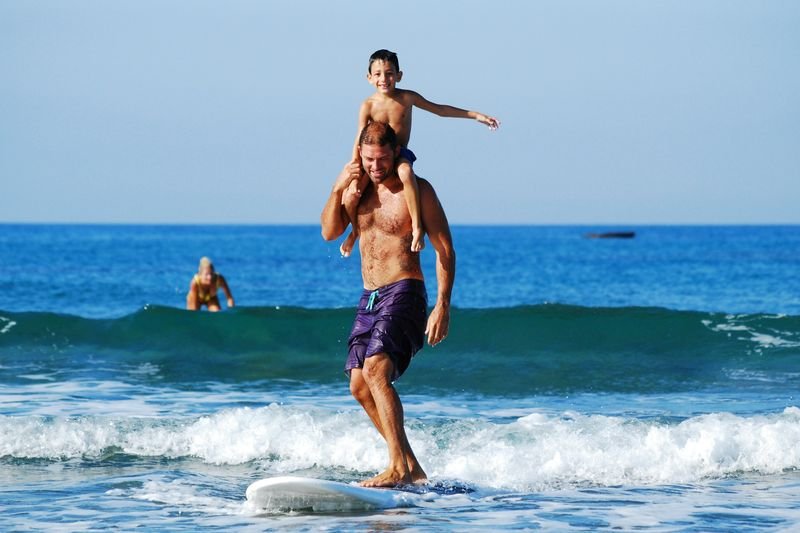
- Families: October, November, March and April, with the sea between 17 and 22 °C and waves that are consistent but not heavy.
The surf side of the calendar, spot by spot, is in our surf spots guide from Agadir to Imsouane, and surfing Morocco in winter takes November to February one month at a time.
Tamraght: the same weather, one bay south
Tamraght, about 8 km south of Taghazout and fifteen minutes in the hostel van, shares the same coast and the same climate: the figures above hold for both villages. The difference is in the water. Devil's Rock, a sand-bottom beach break, sits behind a headland that halves the swell, so beginners still have their lesson on the biggest winter days, and Banana Point, the long soft right at the river mouth, is at its best between 1 and 2 m. Choosing between the villages rather than the months? Read Taghazout vs Tamraght: which village to stay in.
What to pack for the Taghazout weather
- Sun cream and a cap in every month: the sun is high even in January, and sunburn on the backs of the legs is the injury our coaches treat most.
- A warm layer for evenings and dawn, from November to April.
- Swimwear for summer afternoons and the rock pools of Paradise Valley, about fifty minutes inland from Tamraght.
- A light rain jacket from November to March, and only just.
Where to stay
Intermediates and advanced surfers should take our Taghazout surf camp, a short walk from Panorama and Hash Point; its twin and triple rooms have air conditioning for August, and our Taghazout travel guide covers the village around it. Beginners and families are better at the Tamraght hostel between Banana Point and Devil's Rock, eight minutes from both in the van. There are no seasonal supplements, so a week in December costs the same as a week in May; the totals are on the surf packages page. Book the month that suits you, or write to us first and we will tell you what the sea usually does that week.