Taghazout, Morocco: where it is and what it is like
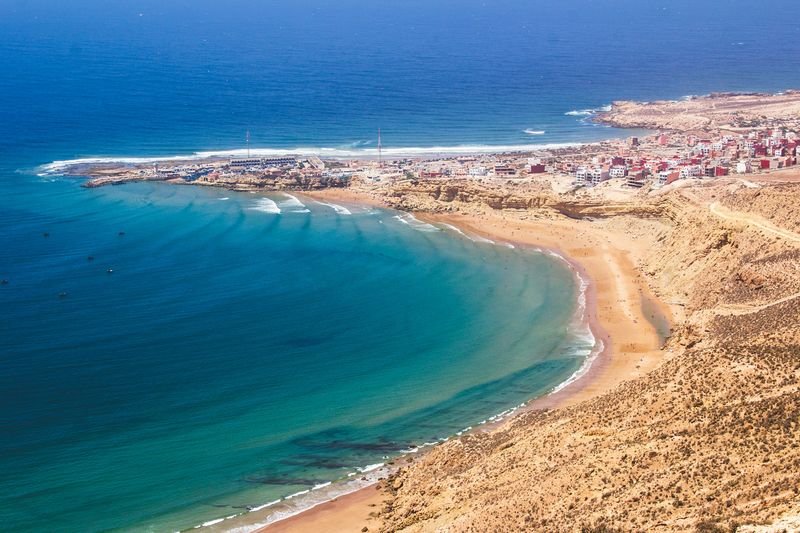
Taghazout sits on the N1 coast road in the Souss-Massa region, about 24 km and half an hour north of Agadir. It has been a commune of its own since 1992, and the commune counted 4,861 people in the 2024 census. Most people are Amazigh; Moroccan Arabic is the everyday language, and Tachelhit, French and English are spoken too. The village lives on fishing, tourism and argan oil, and it has drawn travellers since the late 1960s, when hippies began to stop here.
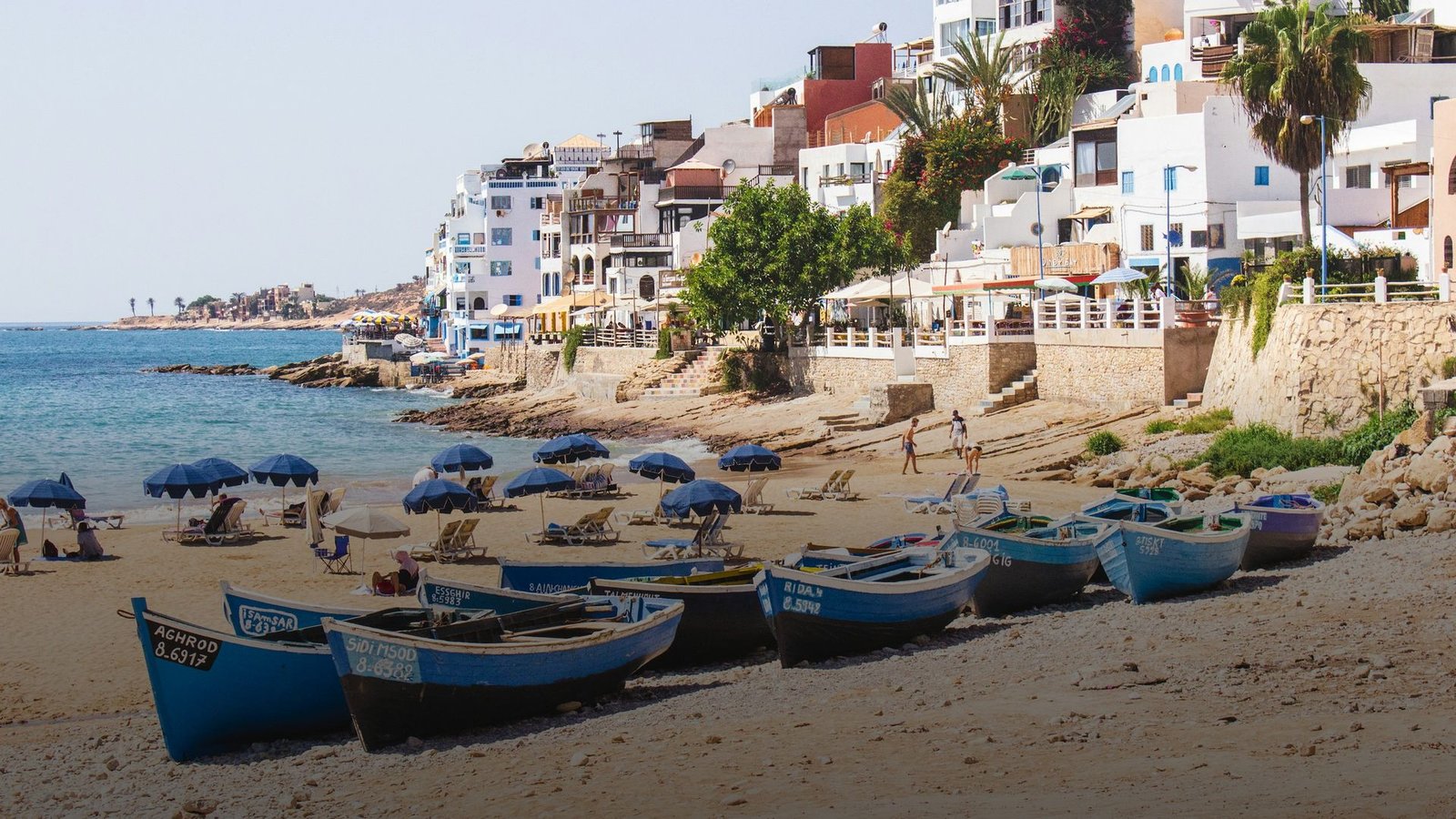
The day starts on the slipway: blue boats pulled up every morning, and the cafés above them full of surfers checking the point. Behind the seafront, the lanes are surf shops, juice bars and rooftop restaurants. It is the busiest village on this coast and the most social, with everything on foot and always someone to surf with. South of it, a resort zone called Taghazout Bay, with large hotels and a golf course, lines the beach towards Tamraght.
Getting to Taghazout from Agadir airport
Fly to Agadir Al Massira (AGA), about three and a half hours from the UK. The Taghazout hostel is 50 km from the terminal, 50 to 60 minutes up the coast road. Stay with us and a driver from the hostel meets your flight; the transfer is in every package, both ways. Marrakech (RAK) has more routes but is about three and a half hours by road; we arrange that transfer for a supplement. Once here, you do not need a car: shared taxis run along the coast road all day for a few dirhams, and the hostel van carries guests between our two hostels and to the surf spots at no charge.
The surf spots, and who they suit
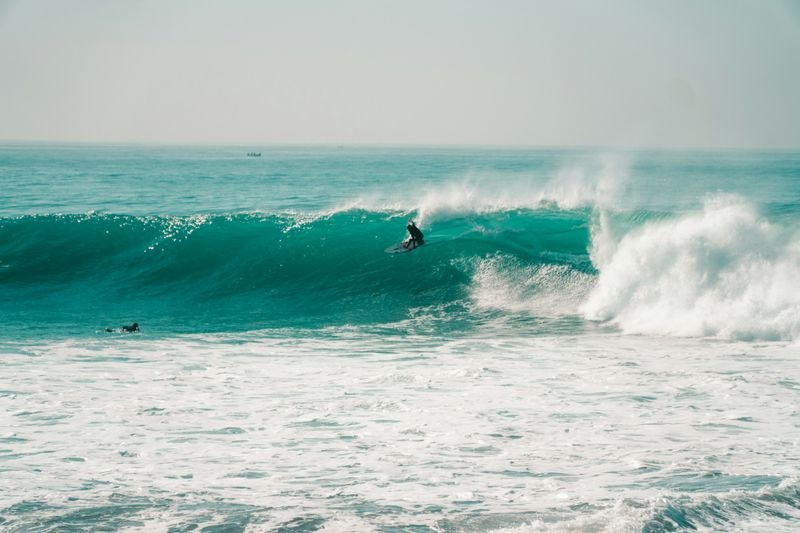
The two waves in front of the village take the small days and the lessons; the points on the headland to the north made the name.
| Spot | From the hostel | Wave | Level |
|---|---|---|---|
| Panorama | 5 min on foot | Beach and reef, the most swell in the village | Beginners on small days, intermediates |
| Hash Point | 10 min on foot | Mellow right off the rocks, in front of the cafés | Beginners at low size, intermediates |
| Anchor Point | 25 min on foot, 6 in the van | Long right over rock, up to 500 m | Intermediates with a coach under about 1.5 m, then advanced |
| Mysteries | Between Anchor and Killers | Right point over rock, tricky take-off | Solid intermediates |
| Killer Point | 6 min in the van | Powerful right over reef | Advanced |
| Boilers | Past the lighthouse | Heavy right over a ship's boiler | Advanced |
Anchor Point wants a mid-to-large north-west swell and has its season from September to March. Killer Point holds the biggest swells and is named, the story goes, after orcas seen off the point. When the village waves are too big for a beginner, the van goes twelve minutes south to Banana Point in Tamraght, or to Devil's Rock on the biggest days. The guide to every surf spot between Agadir and Imsouane explains how the coach picks the morning's spot, and Taghazout vs Tamraght compares the two villages level by level.
Eating and drinking
Food in Taghazout happens at three heights: cafés on the slipway, juice bars in the lanes, rooftop restaurants above them. Evenings are the liveliest on the coast, but this is still a working fishing port, so the cafés close around 23:00 and mornings start early. Alcohol is limited in Taghazout and not sold in Tamraght; you may bring your own to either SurfsHUB hostel and drink it on the terrace, and the nearest shops that sell it are in Agadir. At the hostel, dinner is at 20:00 at one long table: tagines, grilled sardines from the slipway, couscous on Fridays.
Day trips from Taghazout
- Imsouane, about an hour and a half north: a fishing village with The Bay, a very long, gentle right that everyone can surf and the longest wave in Morocco, and Cathedral, more exposed and more powerful. Our day trip runs once a week when it is on, at €40 per person, paid on the day; our Imsouane guide has the rest.
- Paradise Valley, a palm-lined gorge of the Tamraght river in the Atlas foothills, with rock pools warm enough to swim in. It is about fifty minutes inland from Tamraght, then around half an hour on foot from the car park to the pools.
- Souk El Had in Agadir, one of the largest covered markets in the country: thousands of stalls of spices, argan oil and ceramics, worth half a day.
- An argan-oil village. The argan tree is endemic to south-west Morocco, and the know-how around the tree, whose oil is extracted mainly by rural women, is on UNESCO's intangible-heritage list.
From 5 nights, every package includes one excursion day for Paradise Valley, Souk El Had and an argan-oil village, in place of that day's surf trip. Nearer the hostel, walk the beach to Tamraght at low tide, about an hour and a quarter, and take a shared taxi back.
When to go to Taghazout
There is surf all year; what changes is the size, the wetsuit and the crowd. October and November suit most people: building swell, offshore mornings, warm water. December to February brings the biggest swell, the points at full size and the busiest line-ups, Christmas above all. March and April stay consistent and quieter. May to September is small and warm, with a sea breeze from about 13:00, so beginners and families surf in the morning.
The climate is semi-arid. At Agadir's weather station, the average daytime high runs from about 21 °C in January to 27 °C in August, and most of the roughly 230 mm of yearly rain falls between October and April. The sea is about 17–18 °C from December to March and 20–22 °C from July to October. Month by month, see Taghazout weather by month; for the big months, surfing Morocco in winter.
Where to stay in Taghazout
Our Taghazout surf camp is a converted village building in the centre: six rooms and 21 beds, a roof terrace, quiet hours from 23:00, and five of the six rooms with a bathroom of their own. It suits surfers who want the points on foot and a livelier evening, from intermediate up, and beginners who like some life around them. For a first week, a family or quiet nights, our Tamraght surf camp, fifteen minutes south, has 32 beds, a garden and a roof terrace above the beach, and a stay can be split between the two, at least 2 nights in each. Our hostels in Taghazout and Tamraght are compared room by room.
Every package includes the room, coaching, board and wetsuit, three meals a day, daily yoga and the airport transfer both ways; the totals are on the page for our surf holidays in Morocco. When you have your dates, book the Taghazout hostel.